

What Does Creatine Do? Inside the Most Studied Supplement in Sports Nutrition
Is creatine safe long term?
Creatine recycles ATP, the molecule your cells spend for energy. Supplementing 3–5 g per day raises muscle phosphocreatine stores by roughly 20%, which lets you perform an extra rep or two in short, hard efforts. Over weeks that extra training volume produces measurable gains in strength and lean mass. Creatine also pulls water into muscle cells, which adds 2–4 lb of scale weight in the first two weeks — this is intracellular water, not fat and not bloating under the skin. A growing body of research shows modest cognitive benefits under sleep deprivation and mental fatigue, because the brain uses the same phosphocreatine system.
- Regenerates ATP for short, high-intensity efforts
- 3–5 g daily raises muscle phosphocreatine about 20%
- Strength and lean mass gains come from the extra training you can do
- Early 2–4 lb gain is water inside muscle cells, not fat
- Modest cognitive benefits under sleep loss and mental fatigue
What does creatine actually do in the body?
It donates a phosphate group to regenerate ATP during efforts lasting a few seconds to about half a minute — sprints, heavy sets, jumps. More stored phosphocreatine means the effort stays hard for slightly longer before performance drops.
Does creatine make you gain weight?
Usually 2–4 lb in the first two weeks, and it is water drawn into muscle cells. It makes muscle look fuller rather than softer. Fat gain from creatine itself does not happen.
Does creatine work if you do not lift weights?
It still raises muscle and brain phosphocreatine, and there is evidence for cognitive and healthy-aging benefits. But the strength and size effects require training — creatine amplifies a stimulus, it does not create one.
How long before creatine works?
Stores saturate in about 3–4 weeks at 3–5 g per day, or 5–7 days with a 20 g loading phase. Performance effects follow saturation.
Creatine works on top of a solid nutritional base. These are the whole-food protein and herbal formulas we build that base with.
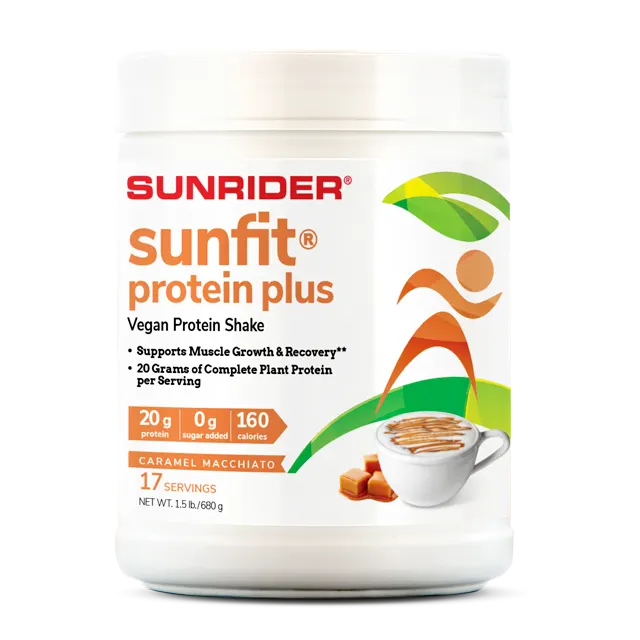
SunFit® Protein Plus | Pea & Rice Protein
$76.74Buy now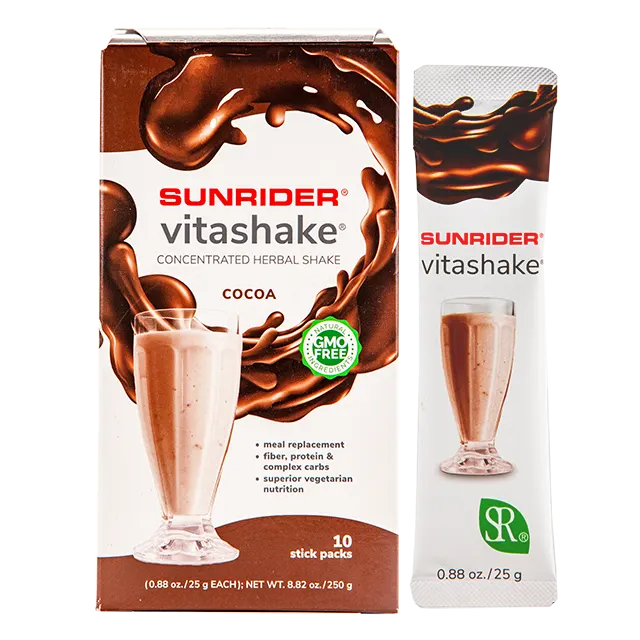
VitaShake®
$38.31Buy now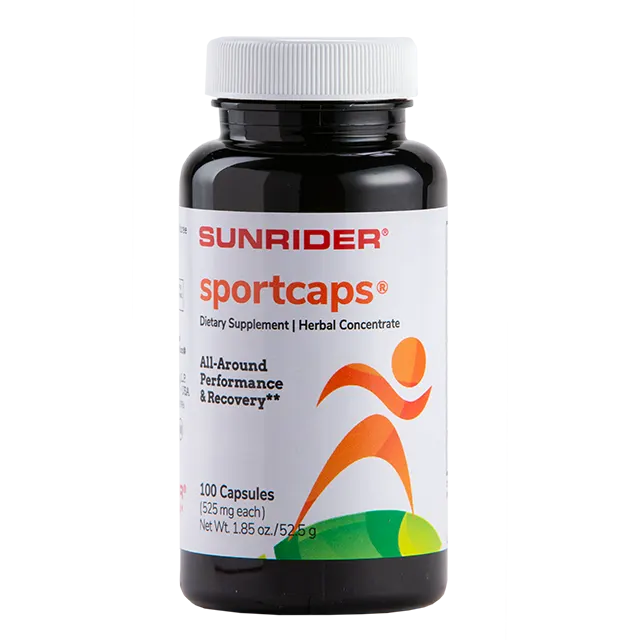
SportCaps®
$51.06Buy now

Creatine has more human trials behind it than any other sports supplement, and it is still the one people misunderstand most. Here is what it does mechanically, what shows up in the mirror, and what the research does not support.
The energy system creatine feeds
Your cells run on ATP, but they store only a few seconds of it. Phosphocreatine is the buffer that rebuilds ATP almost instantly during short, intense work — the first 10 to 30 seconds of a sprint or a heavy set.
Supplementing raises that buffer by about 20% in most people, and roughly 30% in people who eat little red meat or fish. Vegetarians usually notice the most, because their baseline stores are lowest.
What that means in training
The practical effect is small per set and large over time. An extra rep on a few sets each session compounds into meaningfully more weekly volume, and volume is the primary driver of hypertrophy.
Meta-analyses consistently show a few extra pounds of lean mass and better strength gains over 8–12 weeks compared to training alone.
- Better performance in sets lasting roughly 5–30 seconds
- More total weekly training volume
- Slightly faster between-set recovery
Water weight, explained honestly
Creatine is osmotically active: it draws water into the muscle cell. That is why the scale moves early and why muscles look fuller, not puffier.
Some people report bloating, which is almost always a loading-phase effect from taking 20 g a day. Skipping the load and taking 3–5 g daily avoids it.
The brain part people miss
Neurons use phosphocreatine too. Trials in sleep-deprived and mentally fatigued participants show modest improvements in working memory and reaction time — the effect is clearest when the brain is stressed, not when it is well rested.
How long it takes to feel anything
At 3–5 g per day, muscle stores saturate over three to four weeks. A 20 g loading phase for five to seven days gets there faster but is optional.
Consistency beats timing. Take it daily, with or without food, at whatever hour you will actually remember.
Creatine works on top of a solid nutritional base. These are the whole-food protein and herbal formulas we build that base with.
SunFit® Protein Plus | Pea & Rice Protein
$76.74Buy nowVitaShake®
$38.31Buy nowSportCaps®
$51.06Buy now
Frequently asked
- Is creatine safe long term?
- Studies out to five years in healthy adults show no harm to kidney or liver markers at 3–5 g per day.
- Do you need to cycle creatine?
- No. Cycling offers no documented benefit; stores simply drop back to baseline over about a month when you stop.
- Does creatine cause hair loss?
- One small 2009 study found a rise in DHT. No study since has shown actual hair loss, and the finding has not been replicated.
- Which form is best?
- Creatine monohydrate. Every alternative form is either equivalent or worse, and monohydrate is the cheapest and most studied.
Put it into practice
Browse whole-food herbal nutrition, clean beauty, and non-toxic home essentials from Sunrider's own farms and labs.
Keep reading
Ready to order?
Everything here ships direct from Sunrider at official pricing, with the manufacturer guarantee — no marketplace reseller in between.
SunFit® Protein Plus | Pea & Rice Protein — $76.74 · SKU 0154134 · in stock, ships from Sunrider