

High-Protein Plant Foods: A Ranked List With Real Serving Sizes
Is plant protein harder to digest?
The highest-protein plant foods per realistic serving are seitan (about 25 g per 3.5 oz), tempeh (about 19 g per 3 oz), lentils (18 g per cooked cup), tofu (about 17 g per 3.5 oz firm), edamame (17 g per cup), black beans (15 g per cup), and whole-food plant protein powder (20–25 g per serving). Plant proteins are not individually incomplete so much as unbalanced: legumes are low in methionine and grains are low in lysine, so eating both across a day produces a complete amino profile without any need to combine them at the same meal. Hitting 120 g a day on plants is straightforward once two meals are anchored to a legume or soy food and one serving comes from powder.
- Seitan, tempeh, lentils, tofu and edamame lead per serving
- Legume plus grain across a day gives a complete profile
- No need to combine proteins within a single meal
- Anchor two meals to legumes or soy, add one shake
- Plant protein builds muscle when total intake is matched
What plant food has the most protein?
Seitan, at roughly 25 g per 3.5 oz, followed by tempeh at about 19 g per 3 oz. Among unprocessed foods, lentils lead at 18 g per cooked cup.
Do you need to combine plant proteins at every meal?
No. The complementary-protein-at-every-meal idea was retired decades ago. Your body maintains an amino acid pool, so variety across the day is enough.
How do you get 120 g of protein a day on plants?
Anchor two meals to a legume or soy food at 18–25 g each, add a 20–25 g protein shake, and let grains, nuts, seeds and vegetables contribute the remaining 30–40 g across the day.
One whole-food shake covers the gap that plant meals usually leave. These are the formulas we use to close it.
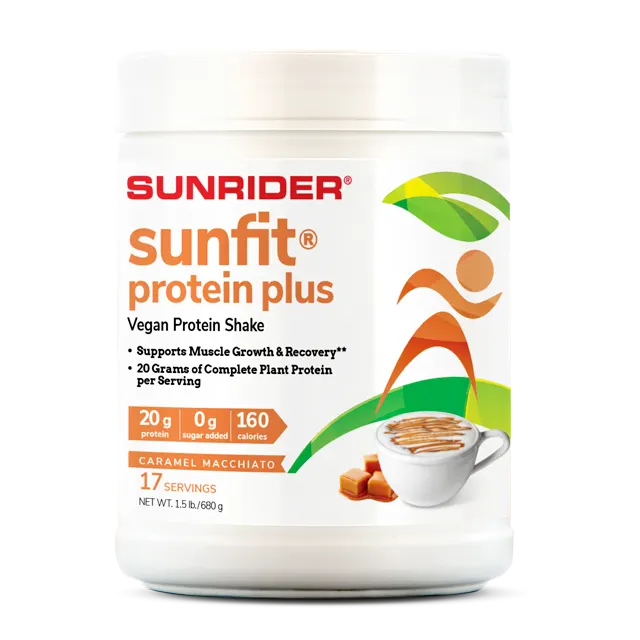
SunFit® Protein Plus | Pea & Rice Protein
$76.74Buy now
NuPlus®
$32.64Buy now
ElectroSport® Powder
$35.14Buy now
Plant-based eating stalls for most people at the same place: the daily protein number. It is a logistics problem, and the fix is knowing which foods carry real weight per serving.
The ranked list, by realistic serving
Protein per 100 g is a misleading metric because nobody eats 100 g of dry lentils. These are grams per serving people actually eat.
| Food | Serving | Protein |
|---|---|---|
| Seitan | 3.5 oz | 25 g |
| Plant protein powder | 1 serving | 20–25 g |
| Tempeh | 3 oz | 19 g |
| Lentils, cooked | 1 cup | 18 g |
| Tofu, firm | 3.5 oz | 17 g |
| Edamame | 1 cup | 17 g |
| Black beans, cooked | 1 cup | 15 g |
| Chickpeas, cooked | 1 cup | 15 g |
| Quinoa, cooked | 1 cup | 8 g |
| Hemp seeds | 3 tbsp | 10 g |
| Peanut butter | 2 tbsp | 8 g |
The amino acid question, settled
Legumes run low in methionine; grains run low in lysine. Eating both within a day covers the profile, because the body draws on a circulating amino acid pool rather than requiring perfect per-meal composition.
The exception worth respecting is leucine. Plant meals often land lower, so slightly larger servings — or a blended pea-and-rice protein — help around training.
Building a 120 g day
Two anchor meals and one shake gets you most of the way there. The remainder accumulates almost invisibly from grains, nuts, seeds and vegetables.
- Breakfast: whole-food protein shake — 25 g
- Lunch: lentil or chickpea bowl with quinoa — 26 g
- Dinner: tempeh or tofu with rice and vegetables — 27 g
- Snacks: hemp seeds, edamame, peanut butter — 25 g
- Background from grains and vegetables — 15–20 g
Where plant eaters actually go wrong
The common failure is a diet built on vegetables and grains with legumes treated as an occasional side. Vegetables are nutritionally excellent and protein-poor.
Treat a legume or soy food as the anchor of two meals a day and the number resolves itself without any change in philosophy.
One whole-food shake covers the gap that plant meals usually leave. These are the formulas we use to close it.
SunFit® Protein Plus | Pea & Rice Protein
$76.74Buy nowNuPlus®
$32.64Buy nowElectroSport® Powder
$35.14Buy now
Frequently asked
- Is plant protein harder to digest?
- Whole legumes can be, especially at first. Tempeh and tofu are easier because of processing, and whole-food powders are usually the gentlest option.
- Do plant eaters need more total protein?
- Slightly. Adding about 10% to the target accounts for lower digestibility and leucine content in most plant sources.
- Is soy safe to eat daily?
- Yes for the vast majority of people. Large reviews find no adverse hormonal effects at normal dietary intakes.
Put it into practice
Browse whole-food herbal nutrition, clean beauty, and non-toxic home essentials from Sunrider's own farms and labs.
Keep reading
Ready to order?
Everything here ships direct from Sunrider at official pricing, with the manufacturer guarantee — no marketplace reseller in between.
SunFit® Protein Plus | Pea & Rice Protein — $76.74 · SKU 0154134 · in stock, ships from Sunrider