
Is Sunrider an MLM? A Straight Answer About the Business Model
Do I have to recruit people to earn anything?
Sunrider uses direct sales through independent business owners, which is a form of multi-level marketing: you buy products at a discount, sell or use them, and can earn additional commission from a team you introduce. The legal and practical distinction from a pyramid scheme is that income must come from product sold to end customers rather than from recruitment fees — Sunrider charges no large buy-in and pays on product volume, not on signing people up. That does not make it easy money. Most people earn a discount plus modest supplemental income, real income takes twelve to twenty-four months of consistent work, and it suits people who already use and can genuinely recommend the products.
- Yes — it is direct sales with a multi-level commission structure
- No large buy-in; commission is paid on product volume
- Pyramid schemes pay for recruitment; that's the legal line
- Most participants earn a discount plus supplemental income
- Best fit: existing product users with an actual audience
Is Sunrider a pyramid scheme?
No. A pyramid scheme derives income from recruitment fees with no real product. Sunrider pays commission on product purchased and sold, charges no significant entry fee, and has manufactured its own goods since 1982.
How do Sunrider business owners make money?
Three ways: buying at wholesale and selling at retail, volume rebates on their own and their customers' orders, and commission on the sales volume of business owners they introduce.
How much does it cost to start?
The registration itself is inexpensive; the real cost is a starter product order, typically a few hundred dollars, because you cannot credibly sell food you have not eaten.
Who actually succeeds at this?
People who already use the products daily, have or can build a genuine audience, and treat it as a two-year project rather than a two-month one. Those with no interest in the products almost never last.

If you searched this, you want a straight answer rather than a pitch. Here it is, along with the parts of the model people usually find out about too late.
MLM versus pyramid scheme: the actual difference
Regulators draw the line at where the money comes from. If participants are paid primarily for recruiting other participants, it is a pyramid scheme and it is illegal. If they are paid on the sale of a real product to people who want it, it is direct sales — legal, and only as good as the product.
Sunrider sits on the direct-sales side: no meaningful entry fee, commission tied to product volume, and a company that has manufactured its own goods for four decades. The scepticism people bring to the category is still healthy; apply it to the compensation details, not to the category label.
Where the money actually comes from
There are three income sources. The first is the wholesale-to-retail spread on products you sell. The second is volume-based rebates on the total ordered through you, including your own use. The third is a commission on the volume produced by business owners you introduce and support.
The order matters. People who build on the first two — real customers who reorder — end up with durable income. People who skip to the third build something that evaporates as soon as they stop recruiting.
What it costs to start
Registration is inexpensive. The genuine cost is your first product order, because you cannot recommend food you have not eaten or skincare you have not used. A realistic first-month figure including a working stock of the products you'll talk about is a few hundred dollars.
There is no requirement to buy a large inventory, and you should be wary of any upline who tells you otherwise. Stock what you personally use and what you can demonstrate.
| Stage | Typical time | Typical outcome |
|---|---|---|
| Personal use + discount | Month 1–3 | Products at wholesale; no net income |
| First regular customers | Month 3–9 | Covers your own product spend |
| Consistent retail base | Month 9–18 | Modest supplemental income |
| Team volume | Month 18+ | Meaningful income for those who kept going |
Who this genuinely suits
It suits people who already buy the products, enjoy talking about health, and have or can build an audience — a class, a clinic, a community, a content channel. It suits people who can work at something for two years before judging it.
It does not suit people looking for fast income, people uncomfortable with selling, or anyone who would need to pretend enthusiasm for the products. Those are the three reasons almost everyone who quits, quits.
Frequently asked
- Do I have to recruit people to earn anything?
- No. You can operate purely as a retailer, buying at wholesale and selling at retail, and never build a team.
- Is there a monthly purchase requirement?
- Maintaining certain ranks requires monthly volume, but basic business-owner status does not require large ongoing orders. Ask for the current specifics in writing before joining.
- Can I do this alongside a full-time job?
- Most people do. Eight to ten focused hours a week is the common starting point.
- What should I ask before signing up?
- Ask for the compensation plan document, the return policy, whether there is any inventory requirement, and what support your sponsor personally provides.
Ready to start?
See exactly how the home-based Sunrider business works — startup costs, time commitment, and the mentorship we provide.
Keep reading
Ready to order?
Everything here ships direct from Sunrider at official pricing, with the manufacturer guarantee — no marketplace reseller in between.
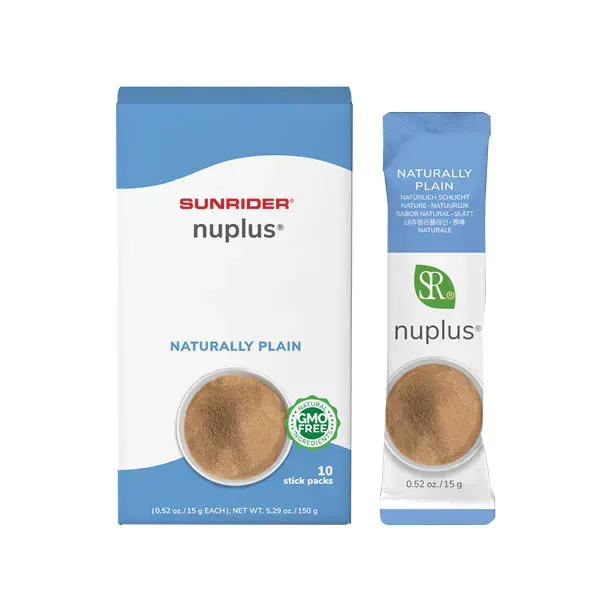
NuPlus® — $32.64 · SKU 0186734 · temporarily out of stock