
Sunrider Review: Products, Philosophy, Prices and Who It's Actually For
How long before Sunrider products make a difference?
Sunrider is a family-owned herbal food company founded in 1982 that makes concentrated whole-food herbal formulas, skincare, and household products, manufactured in its own facilities rather than outsourced. The distinguishing feature is the Philosophy of Regeneration: formulas are built from whole herbs balanced against one another rather than from isolated, synthesized nutrients, and are treated as foods you eat daily rather than as high-dose supplements you cycle. Prices sit above supermarket supplements and roughly in line with premium practitioner brands, because the concentrates are meant to be diluted and last weeks. It suits people who want food-form nutrition and are willing to pay for vertical manufacturing control; it is a poor fit for anyone shopping purely on cost per serving.
- Founded 1982, family-owned, manufactures in its own facilities
- Whole-food herbal concentrates, not isolated synthetic nutrients
- Designed for daily food-like use, not high-dose cycling
- Premium pricing offset by high dilution and long shelf life
- Best for food-first buyers; not the cheapest per serving
Is Sunrider a legitimate company?
Yes. Sunrider International has operated since 1982, owns its manufacturing facilities in the United States, and sells in dozens of countries through independent business owners. It is a legitimate, long-established herbal food manufacturer rather than a white-label reseller.
What makes Sunrider different from other supplement brands?
Two things: whole herbs instead of isolated extracts, and owning the factory. Most supplement brands buy finished powders from contract manufacturers. Sunrider grows, sources, and processes in-house, which is why its formulas are sold as concentrated foods rather than pills.
Are Sunrider products expensive?
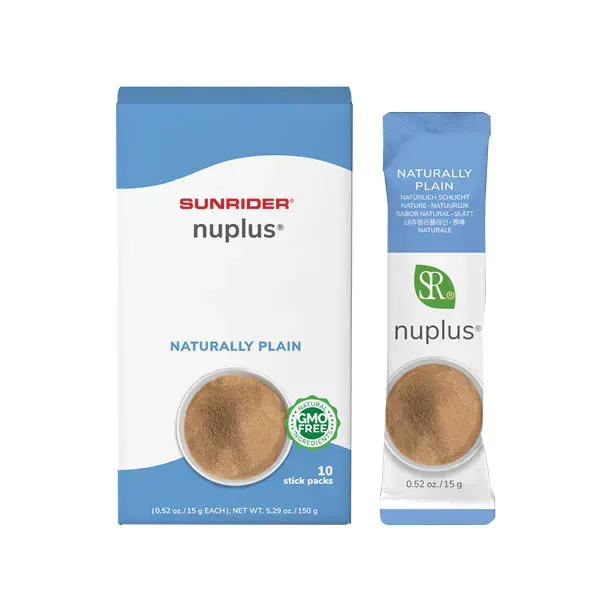
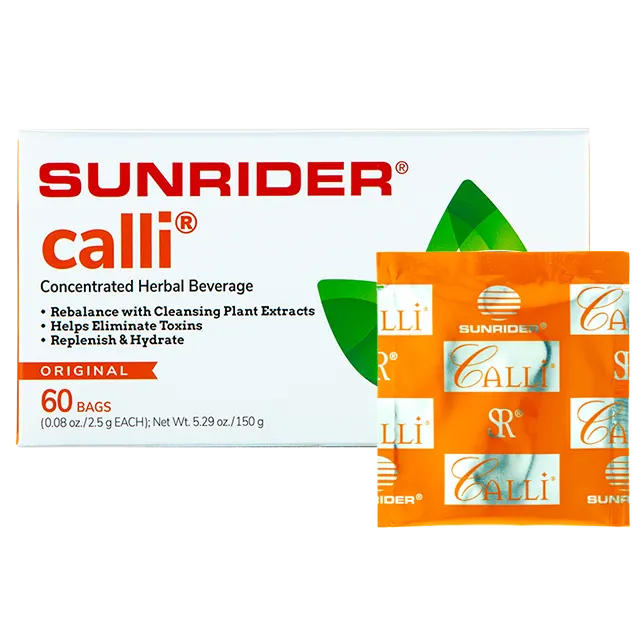
Per package, yes. Per serving, less than it looks — most products are concentrates. A Calli tea packet brews a full pitcher, and NuPlus is a meal base rather than a scoop of powder added to a meal.
Who should not buy Sunrider?
Anyone who wants a single clinically dosed isolated nutrient, anyone shopping strictly on price, and anyone expecting a fast, drug-like effect. These are foods, and food works cumulatively.
If you want to try the range without over-buying, these three cover the core of the philosophy: a food base, a five-system herbal blend, and the daily tea.
Browse the full catalog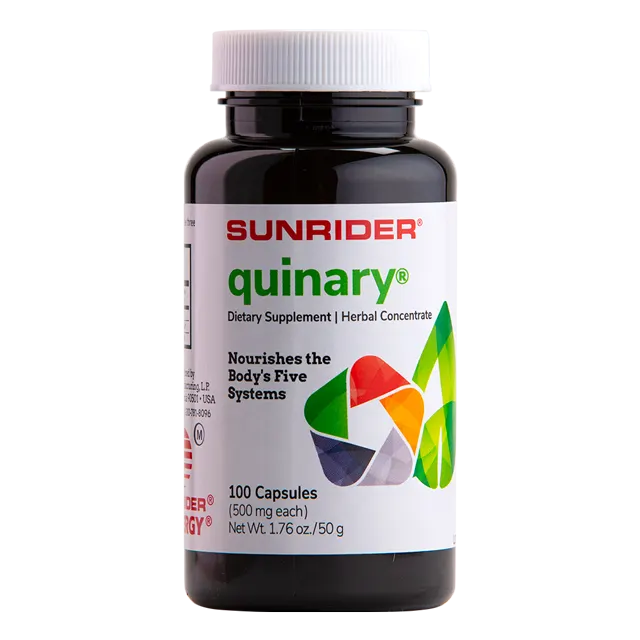

Most brand reviews are either affiliate cheerleading or drive-by cynicism. This one tries to describe what the company is, what the products are formulated to do, what they cost in real use, and where the honest limits are.
What Sunrider actually is
Sunrider International is a herbal food manufacturer founded in 1982 by Dr. Tei-Fu Chen, a herbalist and pharmacist, and Oi-Lin Chen, a physician. It is unusual in the industry for being vertically integrated: it operates its own farms, sourcing relationships, and manufacturing plants rather than commissioning batches from a contract manufacturer.
That structure is the practical reason its catalogue spans food, beverages, skincare, and household cleaners. The same processing philosophy is applied across all four: concentrate a whole plant, keep the matrix intact, avoid unnecessary synthetic additives.
- Founded 1982; still family-owned and operated
- Owns manufacturing rather than outsourcing production
- Four categories: herbal nutrition, food and drink, beauty, home
- Sold through independent business owners, not retail shelves
The Philosophy of Regeneration, in plain language
The company's guiding idea is that the body regenerates itself continuously and that nutrition's job is to supply balanced whole-food material for that process, not to force a single pathway with a megadose. In formulation terms this means blends of herbs chosen to balance each other — warming with cooling, stimulating with calming — rather than a single hero extract at a heroic dose.
Whether you find that framing compelling depends on your priors. The measurable consequence is real, though: the products behave like foods. They are used daily, at modest amounts, and the effect people report is cumulative over weeks rather than dramatic in a day.
What it costs in practice
Sticker prices look high next to a supermarket multivitamin, and that comparison misleads. Nearly everything is a concentrate. A Fortune Delight sachet makes a large bottle of tea; a Calli packet brews a pitcher; NuPlus is used as the base of a meal rather than added to one.
A realistic monthly spend for someone using a food base, a daily tea, and one herbal blend lands in the range of a specialty grocery habit rather than a supplement stack. Buying the whole catalogue at once is the most common and most expensive beginner mistake.
| Sunrider | Mainstream supplement brand | Supermarket store brand | |
|---|---|---|---|
| Form | Whole-food concentrate | Isolated / synthesized nutrient | Isolated, lowest-cost form |
| Manufacturing | Owned facilities | Usually contract-manufactured | Contract-manufactured |
| Use pattern | Daily, food-like | Dosed, often cycled | Dosed |
| Cost per package | High | Medium | Low |
| Cost per serving | Medium | Medium | Low |
The honest limitations
Whole-food herbal formulas are not standardised to a clinical dose of any single compound, so you cannot map them onto a specific trial the way you can with creatine monohydrate or vitamin D. If your goal is a measured intervention for a measured deficiency, a single-ingredient product is the more rational buy.
The products are also not sold in shops, which means you buy through an independent business owner. That is a genuine convenience cost, and it is the reason the buying experience deserves the same scrutiny as the formula.
If you want to try the range without over-buying, these three cover the core of the philosophy: a food base, a five-system herbal blend, and the daily tea.
Browse the full catalogFrequently asked
- How long before Sunrider products make a difference?
- Most people describe changes in energy and digestion over two to four weeks of daily use. These are foods; they work cumulatively rather than acutely.
- Are Sunrider products vegan and gluten-free?
- Many are plant-based, but formulations vary by product. Always check the specific product label, since the catalogue spans foods, beverages, and skincare.
- Can I buy Sunrider in stores?
- No. Sunrider sells through independent business owners and their referral storefronts rather than through retail distribution.
- What should a beginner start with?
- A food base such as NuPlus, one daily beverage such as Calli or Fortune Delight, and one herbal blend such as Quinary. Add nothing else for the first month.
Put it into practice
Browse whole-food herbal nutrition, clean beauty, and non-toxic home essentials from Sunrider's own farms and labs.
Keep reading
Ready to order?
Everything here ships direct from Sunrider at official pricing, with the manufacturer guarantee — no marketplace reseller in between.
NuPlus® — $32.64 · SKU 0186734 · temporarily out of stock